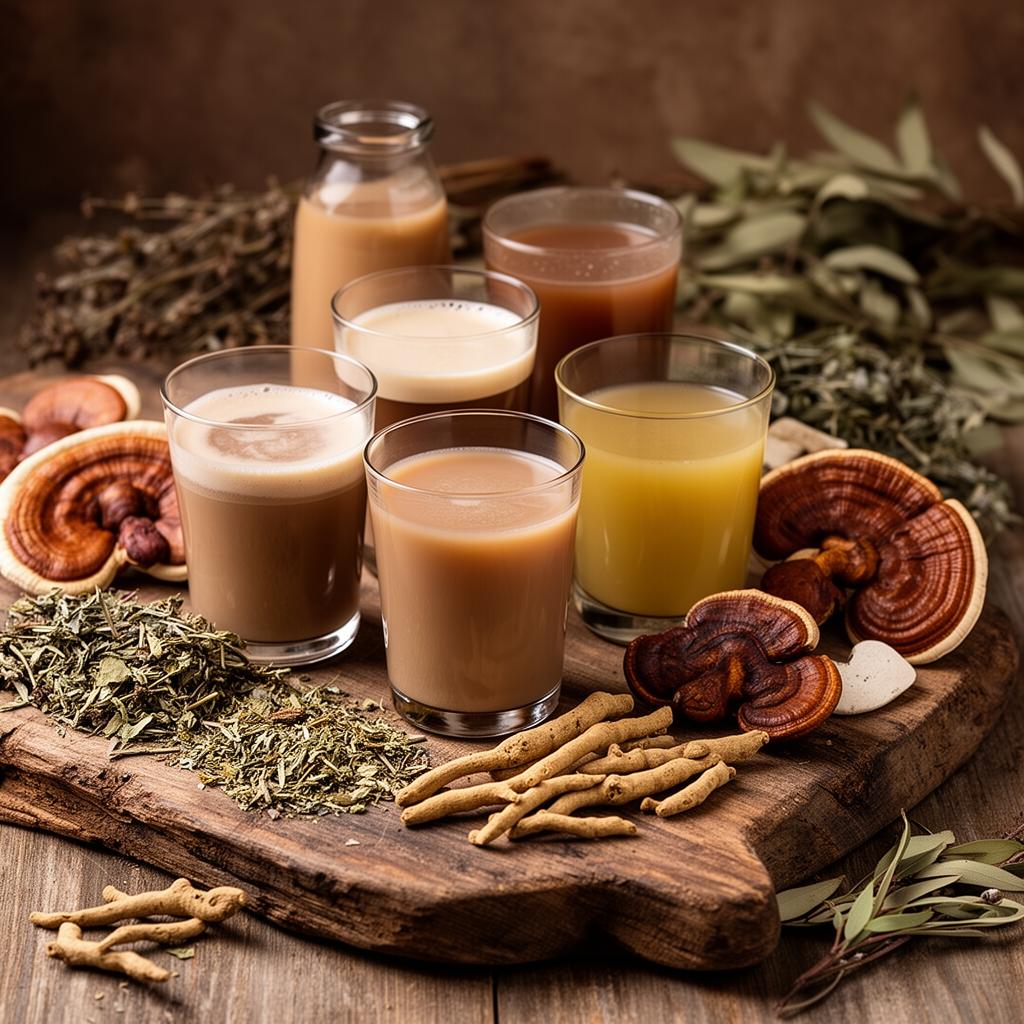
What Are Adaptogen Drinks?
Adaptogen drinks are functional beverages infused with herbs, mushrooms, or amino acids that are classified as adaptogens — substances believed to help the body resist physical, chemical, and biological stressors.
The concept comes from traditional Ayurvedic and Chinese medicine, but has been repackaged for the modern wellness consumer as sparkling waters, tonics, coffees, and elixirs. Think of them as the middle ground between non-alcoholic alternatives and pharmaceutical supplements.
Unlike THC drinks (which produce a noticeable psychoactive effect) or CBD beverages (which interact with the endocannabinoid system), adaptogens work through the hypothalamic-pituitary-adrenal (HPA) axis — essentially modulating your stress response over time.
The 5 Adaptogens You'll See in Every Drink (And What They Do)
Ashwagandha
Stress & CortisolThe most clinically studied adaptogen. Multiple trials show it reduces cortisol levels by 11–32% and significantly lowers self-reported stress and anxiety scores.
Reishi Mushroom
Sleep & CalmKnown as the 'mushroom of immortality' in traditional Chinese medicine. Used primarily for its calming properties and sleep support. Less stimulating than other medicinal mushrooms.
Lion's Mane
Focus & ClarityResearch suggests lion's mane supports nerve growth factor (NGF) production, potentially benefiting cognitive function and memory. Popular in focus-oriented beverages.
Rhodiola Rosea
Energy & EnduranceA Scandinavian adaptogen traditionally used for physical and mental fatigue. Studies show improvements in exercise performance and reduced mental fatigue under stress.
L-Theanine
Calm FocusAn amino acid found naturally in green tea. Promotes alpha brain wave activity — the state associated with calm alertness. Often paired with caffeine for 'smooth' energy.
Do Adaptogen Drinks Actually Work?
Here's the honest answer: it's complicated.
Individual adaptogens like ashwagandha and rhodiola have legitimate clinical research behind them. A 2019 systematic review in the Journal of Alternative and Complementary Medicine found ashwagandha significantly reduced cortisol levels and stress scores across 5 randomized controlled trials.
But there are important caveats for drinks specifically:
- Dosing matters. Clinical studies typically use 300–600mg of ashwagandha root extract. Many drinks contain less than this — and some don't disclose exact amounts.
- Form matters. KSM-66 and Sensoril are standardized ashwagandha extracts with research behind them. Generic "ashwagandha" on a label could mean anything.
- Cumulative vs. acute. Most adaptogen research shows benefits after 4–8 weeks of daily use. A single drink won't transform your stress levels.
- Placebo is powerful. The ritual of opening a calming drink and sipping it slowly has real psychological benefits independent of the ingredients.
Get guides like this one — plus new brand drops and deals — in your inbox. No spam, ever.
Adaptogen Drinks vs. THC Drinks vs. CBD Drinks
| Feature | Adaptogen Drinks | THC Drinks | CBD Drinks |
|---|---|---|---|
| Psychoactive? | No | Yes | No |
| Onset | Cumulative (weeks) | 15–30 min | 30–60 min |
| Drug test risk? | No | Yes | Unlikely |
| Best for | Daily stress management | Social events, relaxation | Calm, recovery |
| Legal? | Yes, everywhere | Varies by state | Yes, mostly |
| Price range | $3–$6/can | $5–$8/can | $4–$7/can |
How to Choose the Right Adaptogen Drink
- Match the adaptogen to your goal. Stressed? Ashwagandha. Can't sleep? Reishi. Need focus? Lion's mane. Don't just grab whatever's on the shelf.
- Check the dose. Look for products that disclose exact milligrams. If a drink just says "proprietary blend" — be skeptical.
- Look for standardized extracts. KSM-66, Sensoril (ashwagandha), or numbered extraction ratios signal quality.
- Consider the full ingredient list. Some "adaptogen" drinks load up on sugar or caffeine. Read the label like you'd read a supplement.
- Give it time. Unlike THC relaxation drinks, adaptogens typically need consistent use over weeks to show meaningful effects.
The Bottom Line
Adaptogen drinks occupy a unique space in the functional beverage world. They're not going to hit you like a THC drink or a glass of wine. But for people who want a daily wellness ritual — something better than water that supports long-term stress resilience — the best adaptogen beverages offer genuine value.
The key is managing expectations: buy them for cumulative benefits, not instant effects. And always prioritize products that are transparent about their ingredients and dosing.
Best Drinks for Relaxation
Adaptogens, THC, and CBD options ranked for unwinding after a long day.
Browse Relaxation DrinksBest Drinks for Sleep
Magnesium, reishi, and low-dose THC options to help you drift off naturally.
Browse Sleep DrinksWant something with a more immediate effect?
THC drinks deliver noticeable relaxation in 15–30 minutes. Our top picks for unwinding.
Best THC Drinks for RelaxationShop These Adaptogens
Ingredients & tools mentioned in this guide
L-Theanine
SupplementAn amino acid found in green tea that promotes calm focus without drowsiness.
Ashwagandha (KSM-66)
AdaptogenThe most clinically studied adaptogen for cortisol and stress. KSM-66 is the best-researched extract.
Reishi Mushroom Extract
AdaptogenKnown as the "mushroom of immortality" — traditionally used for calm and immune support.
Lion's Mane Mushroom
AdaptogenThe nootropic mushroom — supports focus, memory, and nerve health.
Affiliate links. We may earn a commission at no extra cost to you.
Frequently Asked Questions
What are adaptogen drinks?
Adaptogen drinks are beverages infused with adaptogenic herbs and mushrooms — like ashwagandha, reishi, lion's mane, and rhodiola — that are traditionally used to help the body manage stress. They're positioned as functional alternatives to alcohol and caffeine.
Do adaptogen drinks actually work?
Research on individual adaptogens is promising but still developing. Ashwagandha has the strongest clinical evidence for stress and cortisol reduction. Effects tend to be subtle and cumulative rather than immediate. The dose in a single drink may be lower than studied therapeutic doses.
Are adaptogen drinks safe?
Most adaptogens have a long history of traditional use and are generally well-tolerated. However, some can interact with medications (ashwagandha with thyroid drugs, for example). Always check with a healthcare provider if you're on medication or pregnant.
What's the difference between adaptogen drinks and THC drinks?
THC drinks produce a noticeable psychoactive effect (a 'buzz') within 15–30 minutes. Adaptogen drinks work more subtly over time, supporting stress resilience without psychoactive effects. Many people use both for different situations.
Can you drink adaptogens every day?
Most adaptogen drinks are designed for daily consumption. In fact, many adaptogens are studied for their cumulative benefits over weeks of consistent use. Check individual product labels for recommended frequency.
What are the best adaptogen drinks for anxiety?
Drinks containing ashwagandha, L-theanine, or reishi tend to be the most popular for calming effects. Brands like Recess, Kin Euphorics, and Moment focus specifically on stress and anxiety relief through adaptogens.
Do adaptogen drinks have caffeine?
It depends on the product. Some adaptogen drinks (especially those with lion's mane or cordyceps) include caffeine or matcha for focus. Others are caffeine-free and designed for relaxation. Always check the label.
How do adaptogen drinks compare to CBD drinks?
CBD interacts with your endocannabinoid system to promote calm, while adaptogens work through different pathways (primarily the HPA axis and cortisol regulation). Some people stack both. Neither produces a 'high.'